
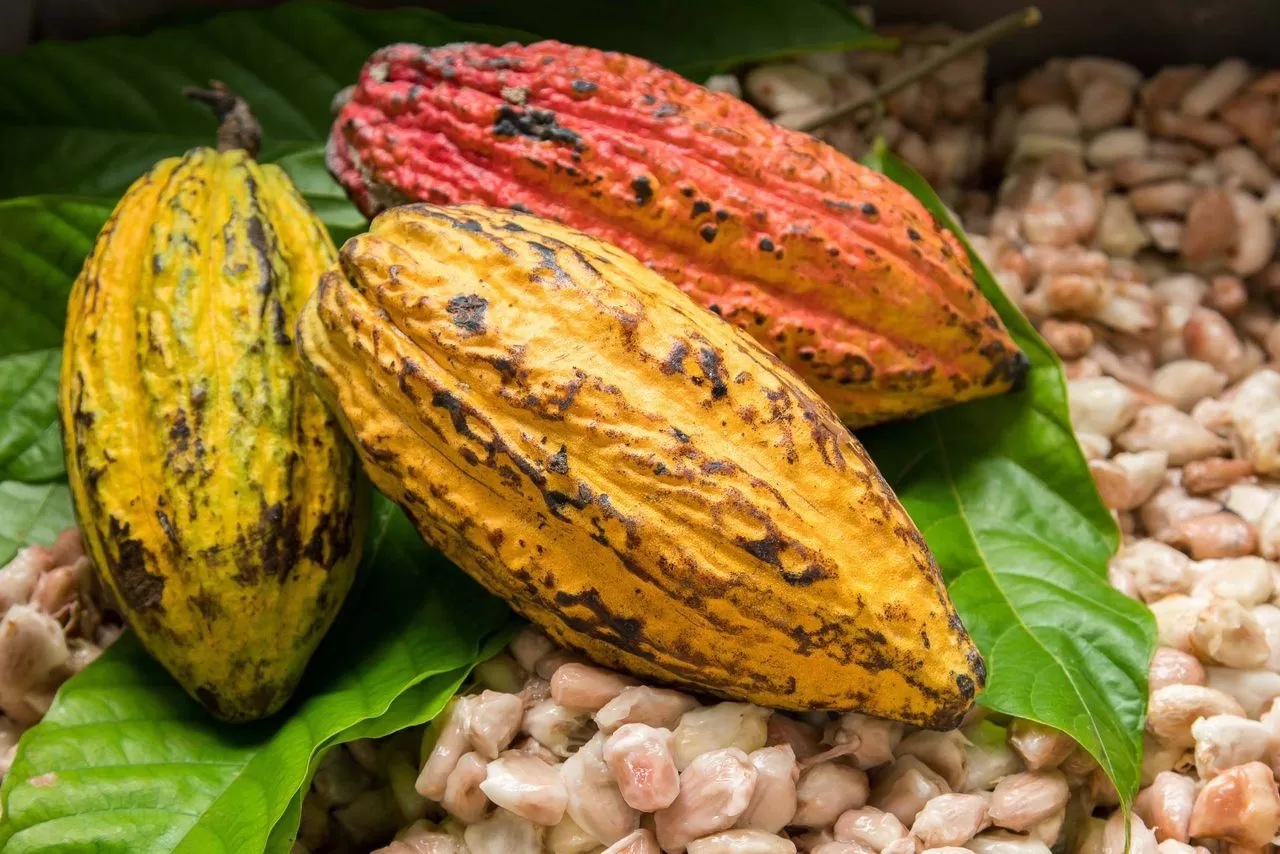
For generations, cocoa has been Ghana’s economic heartbeat. It pays school fees, sustains communities, earns foreign exchange, and placed Ghana on the global map as a respected agricultural nation.
In many cocoa-growing communities, cocoa is not just a crop; it is identity, heritage, and survival. But today, that foundation is cracking.
Across the Western, Ashanti, Eastern, and Central regions, once fertile cocoa lands are being eaten away by illegal mining (galamsey). Rivers that sustained farms are polluted. Soils that took decades to mature are rendered useless in months.
Farmers, some of them third-generation cocoa growers, are watching their livelihoods disappear not because they failed, but because the land beneath their feet is under siege.
At the same time, Ghana remains dangerously exposed to volatile world cocoa prices. Despite being the world’s second-largest producer, the country is largely a price taker, absorbing shocks from global markets it does not control.
In recent seasons, cocoa production has dropped sharply, from nearly 1 million tonnes in 2020/2021 to roughly 750,000 tonnes in subsequent years. This is due to a mix of factors, including climate stress, disease, ageing farms, and land destruction.
This is the uncomfortable truth: cocoa alone can no longer carry Ghana’s economy as the country looks toward an economic reset. Diversification is no longer optional; it is urgent. Agriculture, long seen as traditional rather than transformational, must now become a core pillar of the country’s forward movement.
This is where Ghana’s Tree Crops Development Authority (TCDA) enters the national conversation, not as a background regulator, but as a strategic institution capable of reshaping Ghana’s economic future.
The Economic Logic of Tree Crops
Established under Act 1010 in 2019, the Tree Crops Development Authority was created to regulate, promote, and develop six key crops: cashew, coconut, oil palm, shea, mango, and rubber.
These crops are not experimental. They are already grown across Ghana, already traded globally, and already supporting millions of livelihoods, just not at their full economic potential.
According to TCDA projections, Ghana can generate up to US$12 billion annually by 2030 from these crops if production, processing, and export value chains are properly developed.
That figure is not aspirational rhetoric; it reflects global demand trends, regional competitiveness, and Ghana’s natural endowments.
More importantly, tree crops solve three structural problems Ghana has struggled with for decades:
1. Overdependence on a single export crop
2. Limited value addition
3. Rural unemployment and underinvestment
Tree crops address all three simultaneously.
Cashew: Ghana’s Underutilized Export Powerhouse
Cashew is already Ghana’s second-largest agricultural export after cocoa, earning hundreds of millions of dollars annually.
Yet more than 85–90% of Ghana’s cashew is exported raw, mainly to Asia and Europe, where it is processed, packaged, branded, and resold at many times its original value. This is a classic example of lost opportunity.
Processing cashews locally—roasting, shelling, packaging, and extracting by-products such as cashew nut shell liquid—can increase export earnings three to fivefold while creating thousands of jobs.
Cashew processing is also labor-intensive, making it ideal for employment generation, especially for women and youth.
The crop has a proven potential to become a flagship crop for:
• Regional agro-processing zones
• Export-oriented manufacturing
• SME participation in global value chains
For investors, cashew offers scale, strong global demand, and relatively quick returns compared to many perennial crops.
Oil Palm: Reducing Imports, Powering Industry
Oil palm may be Ghana’s most strategically important tree crop aside from cocoa.
Despite having ideal growing conditions, Ghana still imports significant volumes of refined palm oil every year, draining foreign exchange and exposing the country to global price fluctuations. This is paradoxical and correctable.
Oil palm feeds multiple industries: food, cosmetics, pharmaceuticals, biofuels, and industrial lubricants. A strong domestic oil palm sector reduces imports while supplying raw material to local industries.
With improved seedlings, modern mills, and better outgrower schemes, oil palm can:
• Substitute imports
• Support manufacturing
• Strengthen rural economies
For policymakers focused on industrialization and macroeconomic stability, oil palm is not just an agricultural crop; it is an industrial input.
Coconut: One Tree, Multiple Industries
Coconut is often underestimated, yet it is one of the most versatile tree crops in the world.
From coconut water and oil to husk fiber, charcoal, cosmetics, and even bioenergy, coconut offers multiple revenue streams from a single tree.
Global demand for coconut-based health and wellness products has surged over the past decade, and Ghana is well-positioned to compete.
Many coconut farms along Ghana’s coast were devastated by disease years ago, but rehabilitation programs and improved varieties have reopened the door for expansion.
Coconut also aligns well with climate adaptation efforts in coastal areas increasingly affected by erosion and salinity.
For investors looking for diversification and innovation, the coconut is fertile ground, literally and economically.
Shea: Green Gold from the North
Shea is often called “women’s gold,” and for good reason. Across northern Ghana, hundreds of thousands of women depend on shea collection and processing for income.
Globally, shea butter is a critical ingredient in cosmetics, pharmaceuticals, and food products, with demand driven by multinational brands. Yet Ghana exports much of its shea in raw or semi-processed form, leaving significant value on the table.
Formalizing the shea sector through mechanized processing, quality certification, and export branding can dramatically increase incomes while advancing inclusive growth.
Shea is also naturally drought-resistant, making it ideal for northern Ghana as climate pressures intensify.
Mango: Reducing Waste, Creating Value
Mango production in Ghana has expanded steadily, but post-harvest losses remain high, sometimes exceeding 30–40% due to poor storage, transport, and limited processing capacity. This is a solvable problem.
With investment in cold-chain infrastructure and processing facilities, mangoes can be turned into juices, purees, dried fruit, and concentrates for regional and international markets.
Unlike some tree crops, mango has a relatively short gestation period, meaning returns can be realized faster.
For agribusiness investors, mango represents speed, scalability, and strong regional demand.
Why Tree Crops Matter in an Economic Restructuring
Ghana’s medium and long-term economic transformation agenda emphasizes:
• Productive jobs
• Domestic value creation
• Export diversification
• Reduced vulnerability to external shocks
Tree crops align perfectly with this agenda. They allow Ghana to spread risk across multiple commodities, agro-ecological zones, and markets.
They encourage processing rather than raw exports. And they create sustainable jobs that reduce rural-urban migration.
Crucially, tree crops also offer a pathway to reclaim land and livelihoods threatened by illegal mining—by making agriculture competitive, profitable, and future-oriented.
The Role of Policy and Capital
None of this happens automatically. Policymakers must:
• Strengthen TCDA’s regulatory and coordinating role
• Protect agricultural lands from galamsey
• Align tree crops with industrial and trade policy
• Facilitate affordable financing for processors and farmers
Investors, meanwhile, must see tree crops not as charity or subsistence farming, but as serious business opportunities backed by strong fundamentals and growing global demand.
International partners are already moving in this direction, with over US$200 million committed through World Bank-supported programs to modernize Ghana’s tree crop sector. Private capital must follow.
Conclusion: Planting the Future
Cocoa has served significantly and continues to support Ghana’s economy. But the future demands more in terms of diversifying economic gains from other tree crops with demonstrated potential.
Tree crops like cashew, oil palm, coconut, shea, and mango offer a realistic, scalable, and inclusive pathway to economic renewal.
The Tree Crops Development Authority is well-positioned to spearhead the transformation of Ghana’s agriculture from a sector of survival into a sector of prosperity.
The seeds are already in the ground. What Ghana needs now is the courage and the capital to let them grow.

- Beyond Cocoa: How Ghana’s Tree Crops can Anchor an Economic Reset - January 29, 2026