
On July 30, 2026, the Ghana Cocoa Board Bill was passed into law to govern ongoing sector reforms. The COCOBOD Bill, among other provisions, assures cocoa farmers of at least 70% of the Free on Board (FOB) world market price, replaces the syndicated pre-export loan model with a new domestic financing framework beginning with the 2026/27 crop season, and prohibits mining and environmentally harmful activities on protected cocoa farms, carrying strict custodial sentences for infractions.
At the same time, Licensed Buying Companies (LBCs) have spent two consecutive seasons operating under improvised funding arrangements — a 60/40 model in 2024/25, followed by an 80/20 model in 2025/26 — neither of which has fully resolved the liquidity and payment-delay pressures now defining the buying and internal marketing segment of the value chain.
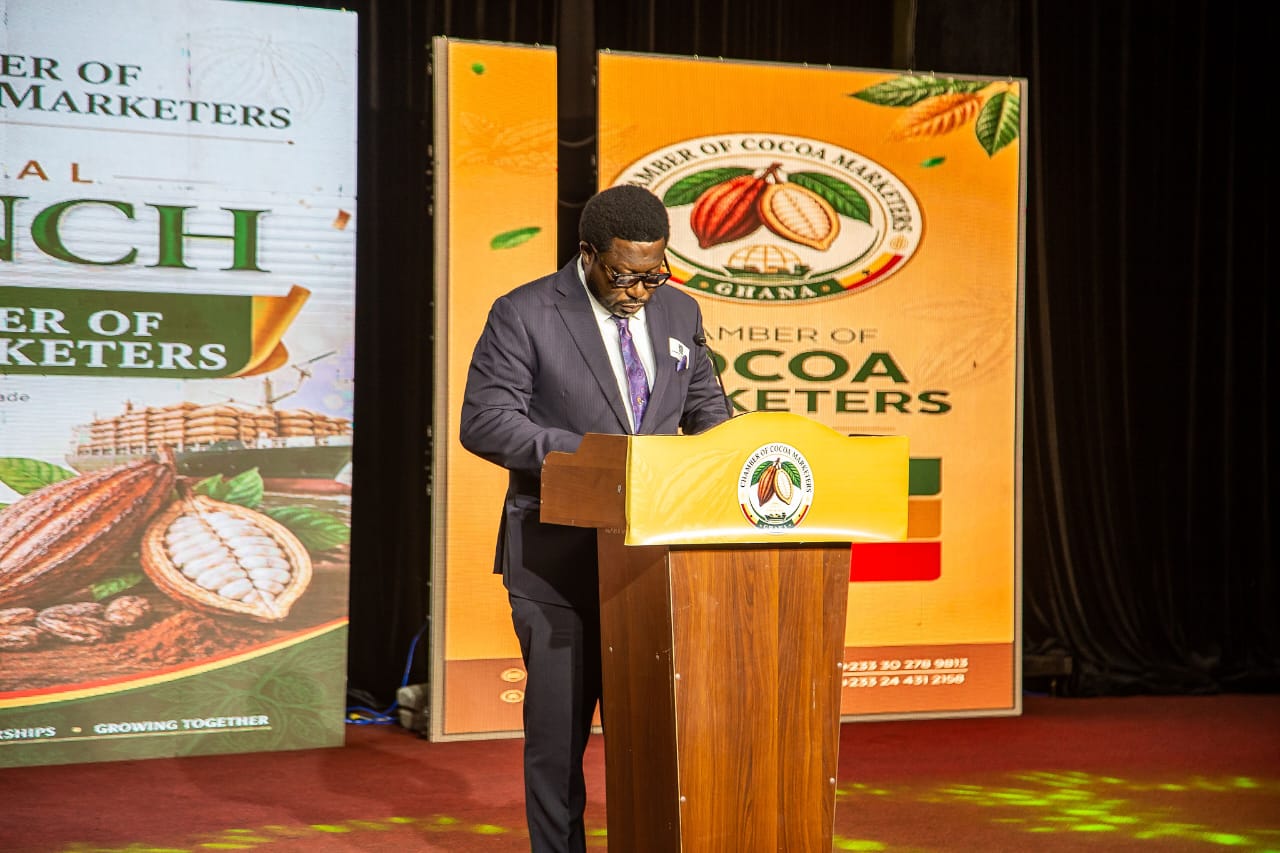
It is within this context that the Licensed Cocoa Buyers Association of Ghana (LICOBAG) is repositioning itself as the Chamber of Cocoa Marketers Ghana (COCOAMAG), a shift from a voluntary association to a formally constituted company limited by guarantee.
For an industry watching the Ghanaian government and COCOBOD set sector reform in motion and rewrite financing architecture in real time, the timing for LICOBAG’s transition to COCOAMAG is not incidental.
It reflects a broader question the sector has been forced to confront amidst growing strict international due diligence regulations: can Ghana’s licensed buyers and allied chocolate and cocoa enterprises remain adequately represented, financed with a robust systemic architecture, and compliant under a governance model designed for a modern cocoa economy?
A defined set of strategic pillars and a single governance framework guide COCOAMAG operations, distinguishing this transition by providing an enforcement tooth—not simply an advocacy weight.
Why this institutional shift is happening now
First, the financing model that underwrote the buying system for over 30 years is gone. COCOBOD’s syndicated loan facility — the mechanism through which seed funds reached LBCs each season—became impractical following disruptions to Ghana’s access to international credit.
The last two seasons have been a period of experimentation: COCOBOD implemented measures allowing a 60/40 pre-financing arrangement through the Bank of Ghana in 2024/25, then an 80/20 model in 2025/26.
LICOBAG has publicly made known that both models weakened COCOBOD’s control over industry financing, leaving LBCs without reliable access to funding or buyers for cocoa stocks. This contributed directly to payment delays and increased smuggling.
The newly passed Cocoa Board Bill signals a further shift toward a domestic financing model—meaning LBCs need an innovative institutional representation capable of influencing how the new funding model is structured in addition to an innovative collective mechanism to manage LBCs’ financing risks.
Secondly, payment delays have become a structural risk rather than a seasonal frustration. As of early 2026, LICOBAG leadership warned that the government needed to urgently secure funding to clear an estimated 300,000 metric tonnes of unpaid cocoa, cautioning that continued delays risked deepening the crisis and eroding farmer confidence in the licensed buying system altogether.
When cocoa sits unsold or unpaid at the farm level—and sometimes is stored under conditions that risk quality grading—the reputational and financial cost is absorbed disproportionately by LBCs, particularly smaller and indigenous firms without the balance-sheet strength to absorb prolonged delays.
Third, non-competitive farmgate pricing is pushing volume outside official channels. COCOBOD has itself acknowledged that a significant volume of cocoa remains unsold because pricing has made Ghanaian beans less attractive to buyers relative to regional alternatives — a dynamic that fuels cross-border smuggling and undercuts the integrity of the regulated marketing system. This strikes at the core function LBCs exist to perform: converting harvested cocoa into secure, traceable, exportable volume.
Together, these pressures point to a conclusion LICOBAG itself has voiced publicly: that reform of Ghana’s cocoa sector has too often been superficial, marked by policy inconsistency and institutional discontinuity across changes in government. A voluntary association, however managed, is structurally limited in its capacity to enforce compliance among members or negotiate durable reform with COCOBOD, the Ministry of Finance, and international financiers on equal institutional footing.
Five Pillars Anchoring the COCOAMAG Reform Agenda
Rather than treating our transitional upgrade as an end in itself, COCOAMAG has structured its mandate around five strategic pillars—each one a direct response to a specific failure point exposed by the sector’s current crisis.
Pillar 1: Policy Leadership & Advocacy: COCOAMAG is now positioned as the formal negotiating platform with COCOBOD, government, and regulators—with licensing and related permits for cocoa value chain players tied to active Chamber membership.
This is a materially stronger position than LICOBAG’s prior advocacy role: The chamber converts LICOBAG from a voice the government may consult into an institution the government must engage, because compliance and market access run through it.
From that footing, COCOAMAG advocates for transparent pricing, financing reform, and risk-sharing mechanisms and provides unified industry positions on legislation, taxation, and sustainability rules—precisely the kind of coordinated input the sector lacked as COCOBOD moved from syndicated financing to a domestic model with limited buyer-side consultation.
Pillar 2: Standards, Compliance & Integrity: COCOAMAG will enforce codes of conduct, payment discipline, and ethical buying practices, monitor member compliance, and apply graduated sanctions where necessary.
This directly addresses a problem LICOBAG has itself acknowledged: that uneven member performance on payment timeliness has damaged the credibility of the entire licensed buying system.
A voluntary association can encourage good conduct; only a chamber with binding authority can enforce it—protecting the collective reputation of licensed cocoa marketers rather than leaving it exposed to the weakest performer.
Pillar 3: Financial Sustainability & Market Stability: COCOAMAG will support members in accessing financing solutions and promote risk mitigation and liquidity management best practices—a direct institutional response to the collapse of the syndicated loan model and the liquidity strain that followed.
Critically, this pillar commits COCOAMAG to the continuous reduction of systemic payment delays and arrears across the value chain and to initiating steps to pay interest in the event of delayed payments.
This converts a long-standing sector grievance—cocoa sitting unpaid at port while reimbursements lag—into an enforceable financial standard rather than a recurring complaint.
Pillar 4: Global Positioning & ESG Compliance: COCOAMAG aligns members with international traceability, the Environmental Social Governance (ESG) frameworks, corporate due diligence standards and acts as a recognised counterpart to international buyers, donors, and partners.
As global buyers move faster than domestic policy on sustainability compliance, this pillar positions COCOAMAG—not individual LBCs—as the coordination point for scaling corporate due diligence measures, including digital traceability nationwide.
Action guided by this pillar will strengthen Ghana’s cocoa brand and competitiveness precisely when regional competitors are contesting market share on price.
Pillar 5: Farmer Relations & Industry Trust: COCOAMAG will promote fair treatment of farmers and prompt payment norms among members, establish grievance and dispute-resolution mechanisms, and support initiatives that strengthen farmer loyalty to licensed buying channels.
This pillar responds directly to the trust deficit created by payment delays and unsold stocks at the farm level — a dynamic that has already been linked to increased smuggling as farmers seek more reliable, better-priced buyers outside the regulated system.
None of these five pillars functions as an aspiration without institutional machinery behind them. COCOAMAG’s governance framework is modelled on the Council–Chamber Executive–Committee structure used by Ghana’s leading chambers—a design chosen specifically to deliver the legitimacy, accountability, and operational effectiveness a voluntary association structure could not provide.
This matters for three practical reasons. First, a Council–Chamber Executives–Committee model separates strategic direction from operational execution and technical compliance oversight.
Enforcement decisions under our second pillar—standardisation, compliance, and integrity—will not be subject to the same governance ambiguity that limited LICOBAG’s ability to sanction non-compliant members.
The adopted operational structure mirrors existing governance architecture that COCOBOD, government ministries, and international financiers already recognise and have built trust in other Ghanaian chamber bodies.
The COCOAMAG governance model preserves institutional memory: policy positions, compliance standards, and financing frameworks built under the LICOBAG structure across leadership transitions, addressing the “policy inconsistency across changes in government”, which LICOBAG itself identified as a root cause of the sector’s superficial reform history.
What This Signals for the Sector
Government and COCOBOD: COCOAMAG offers a unified body and a voice that a fragmented association could not. COCOAMAG’s platform creates a single, accountable institutional partner capable of absorbing regulatory obligations and enforcing them downstream across dozens of buying companies and allied cocoa and chocolate actors — with licensing leverage to make that enforcement real.
Financial Institutions: The new status enables COCOAMAG to collectively mitigate financing risks by collaborating with financial institutions for cocoa trade financing and institutional governance grading at the buyer-representation level, backed by a commitment to reducing delays in payment
Brands and International off-takers: COCOAMAG will now offer a credible, centralised point of assurance on ethical sourcing and traceability compliance.
Farmers and producing communities: COCOAMAG will now enforce adherence to an established mechanism — grievance resolution, payment compliance, and in cases of delay, interest remedies — guarantee fulfilment of premium payment and other member-negotiated commitments that LICOBAG could not enforce.
Drawing from over a decade of sector experience, the broader lesson for Ghana’s cocoa reform agenda is this: institutional architecture matters as much as policy.
COCOBOD and the government can redesign financing models, and Parliament can pass new legislation, but the durability of those reforms depends on whether the sector’s institutions and those representing buyers, farmers, and processors have the standing and enforcement capacity to respond to new regulations and pressures of the modern cocoa economy.
The transition from LICOBAG to COCOAMAG — anchored in these five strategic pillars and a governance framework built for enforcement — is, in that sense, less a rebrand and rather an admission that Ghana’s cocoa sector needs stronger institutions on both sides of the table: not just a stronger regulator, but a stronger, more accountable counterpart to negotiate and enforce reform with.

- Chamber of Cocoa Marketers Ghana to Strengthen Role of Buyers in Sector - August 18, 2026
- Enriching the Significance of Living Income - January 17, 2024
- Empowered Women Lead the Fight Against Child Labour - March 15, 2021