
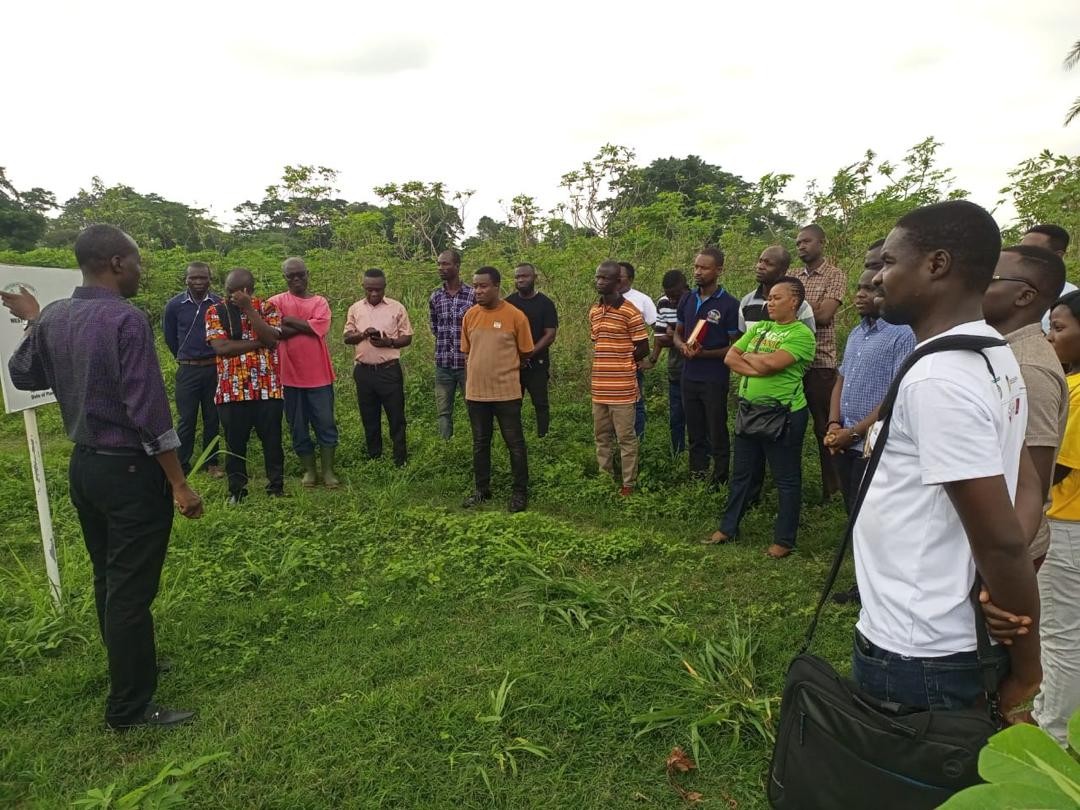
Ghana’s cocoa sector is a cornerstone of the national economy, sustaining over 800,000 farm families and approximately 3.2 million livelihoods across production, transport, and processing.
Contributing 4–5% of GDP and serving as a leading source of agricultural export revenue, cocoa generated roughly $3.86 billion in foreign exchange earnings in 2025, driven by record global prices and strong processing activity.
Beyond macroeconomic indicators, the sector supports rural schools, healthcare, and community infrastructure, making it a fundamental pillar of poverty reduction and national economic resilience.
Yet this vital sector remains highly exposed. Intensifying climate variability, pest and disease outbreaks, and global price volatility pose growing threats to Ghana’s agricultural future.
Agricultural risk management remains fragmented—weakly integrated into national planning frameworks, poorly coordinated across agencies, underfunded, and largely project-driven.
These structural gaps limit Ghana’s capacity to respond proactively to protect farmer livelihoods at scale.
Institutionalising agricultural risk management within Ghana’s national agricultural development agenda is therefore a strategic imperative.
A coherent, policy-led framework would integrate risk management across extension systems, input delivery, agricultural finance, and trade—shifting the sector from reactive crisis response to anticipatory and preventive risk governance.
The TogetHER Project: Demonstrating Agricultural Risk Management at Scale
The TogetHER Project offers a concrete model of how coordinated agricultural risk management interventions can be implemented at scale.
Through a partnership led by Socodevi together with the Ministry of Food and Agriculture (MoFA), Ghana Cocoa Board (COCOBOD), Department of Cooperatives (DoC), Crop Research Institute (CRI), Forest Research Institute of Ghana (FORIG), Licensed Buying Companies (LBC), and insurance stakeholders, planned integrated activities are being implemented across the Ashanti and Western North Regions.
Interventions begin with capacity strengthening at both institutional levels and community levels.
Targeted training workshops on climate-smart cocoa production delivered with COCOBOD have equipped extension agents and farmers with adaptive agronomic practices, including improved shade management, soil fertility maintenance, and pest and disease control.
Complementary training on climate-smart annual crop production, implemented with MoFA, broadens resilience beyond cocoa by promoting diversified farming systems that reduce exposure to climate and market shocks.
At the community level, a deliberate focus on youth engagement is strengthening local service delivery.
Community Extension Agents have trained 239 selected youth across 49 communities in specialised services—including hand pollination, precision pruning, and integrated pest management.
Equipped with forceps, pruning tools, and motorised spraying machines, these young men and women now provide affordable, productivity-enhancing services to farmers, particularly women and resource-constrained households.
This approach simultaneously mitigates production risk and generates rural employment.
At the institutional level, staff of the Cocoa Health and Extension Division (CHED)—a division of COCOBOD—have received training in climate-smart cocoa production, agricultural market risk management, and agroforestry systems.
This has strengthened their capacity to support farmers in managing price fluctuations while improving long-term farm sustainability.
Through these combined efforts, 3,090 farmers across 123 communities have been reached—61% women and 12.9% youth—significantly expanding inclusive access to climate-smart and risk mitigation practices.
Recognising that low agricultural insurance uptake remains a critical gap, driven by affordability constraints, limited awareness, and weak trust, the project facilitated multi-stakeholder consultations to coordinate and scale insurance initiatives.
Key actors, including the National Insurance Commission (NIC), COCOBOD, MoFA, Ghana Agricultural Insurance Pool (GAIP), LBCs, and private insurers, have been engaged to align on scaling strategies.
Targeted workshops for insurance stakeholders and farmer-facing sensitisation programmes have complemented these efforts, building the foundation for broader insurance adoption.
From Isolated Interventions to National Policy Priority
These integrated interventions demonstrate that agricultural risk management, when systematically applied, can meaningfully enhance resilience, productivity, and inclusiveness across Ghana’s agricultural sector.
Yet sustaining and scaling these gains requires formal institutionalisation.
Embedding agricultural risk management into national policy frameworks would strengthen interagency coordination, enable predictable financing through public budgets, and drive investment in agricultural data systems to support evidence-based decision-making.
For Ghana to achieve a resilient and inclusive agricultural transformation, ARM must move from isolated project activity to a central policy priority.
Institutionalising agricultural risk management is not simply a technical reform—it is a strategic necessity for safeguarding farmer livelihoods, stabilising production, and securing Ghana’s agricultural future in an era of deepening climatic and economic uncertainty.

- Socodevi Pushes for Stronger Agricultural Risk Systems in Ghana - June 11, 2026