COCOBOD Cautions Farmers Against Misapplication Of Agrochemicals

Ghana Cocoa Board (COCOBOD), the industry regulator, has once again raised a red flag over the misapplication of agrochemicals by farmers, indicating that the wrongful practice poses threats to sustainable cocoa production and productivity.
Over the years, the frequency of agrochemicals application, over- and under-use of pesticides and insecticides have been cancerous to cocoa production in the country.
The ripple-effects of the trend include low yield and high chemical residue in cocoa beans, which sometimes lead to rejection on the international market over concerns of posing health risks to unsuspecting consumers.
The COCOBOD Officer in Charge of Sankore Cocoa district in the Ahafo Region, David Gyebi-Afriyie, said wrongful application of insecticides and fertilisers continue to characterise the activities of some farmers – lamenting that the trend undermines efforts of COCOBOD, and for that matter government, to transform cocoa production in the country and negotiate for a premium price.
He, therefore, urged farmers to comply with recommendations of extension officers and adopt good agronomic practices (GAP) to avert the situation, saying: “You can’t ignore experts’ advice and expect high yields and premium price”.
Getting the right balance in agricultural inputs is therefore an important part of improving productivity without creating further problems for the crop, the soil, or the people who eventually consume the produce.
Farmers need to understand not only how much of a chemical to apply, but also when it should be used and what role it serves in supporting healthy plant growth.
Careful handling of pesticides, fertilisers, and other agricultural inputs can help reduce unnecessary waste while maintaining the conditions needed for stronger and more consistent yields. This also places greater importance on the way agricultural chemicals are formulated, since substances used in farming may contain different components that affect how effectively they spread, mix, or remain on plants.
The wider field of chemical manufacturing includes materials used in developing agrochemical formulations, including agents that help with wetting, emulsification, dispersion, and foam control, making proper chemical selection another consideration in efforts to improve farming practices.
With greater attention to responsible application, soil management, crop monitoring, and suitable inputs, farmers can work toward better productivity while reducing the risks associated with careless chemical use.
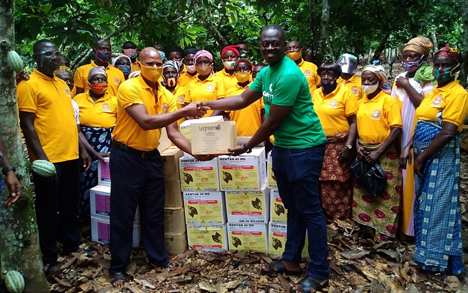
He made these remarks during a presentation of agrochemicals including Begreen flower booster, insecticides and UG fungicides to some farmers in the Sankore enclave.
The beneficiary farmers are in the communities of Agyerekrom, Yamano, Manhyia, Dankwa, Chief Camp and Tweneboa.
The Sankore Cocoa District Officer reaffirmed the commitment of COCOBOD to transform cocoa farming through effective implementation of the productivity enhancement programmes (PEPs) – hand pollination, pruning, rehabilitation, distribution of agrochemicals and other equally important interventions.
He urged the farmers to willingly embrace the programmes and take utmost advantage of them (the PEPs).
“To help increase coverage of the hand pollination exercise in Sankore district, COCOBOD has increased the number of pollinators here from 450 to 750. We have also trained an additional 120 volunteers to support the work of the recruits,” he said.
On behalf of the farmers, Chairman of Agyerekrom Farmers’ Cooperative, Peter Adongo, thanked COCOBOD for the presentation as well as its interventions over the years. He, however, joined the clarion call for COCOBOD to increase cocoa price in the upcoming 2020/2021 season, citing the rising cost of production – hence the need for government to equally respond with a price increment.
He also appealed for the government to give a facelift to the 4-kilometre Kwapong-Agyerekrom road. He said the road’s deplorable state makes it unmotorable whenever it rains, denying farmers access to market centres.

- Côte d’Ivoire, Ghana move to Harmonise Cocoa Farmgate Prices - June 18, 2026
- Afarinick Distributes 400,000 Free Cocoa Seedlings to Farmers - June 10, 2026
- Plunging Global Prices Bring Ivorian Cocoa Sales to a Standstill - February 17, 2026